In a two-sided marketplace, one of your customers is invisible
The Field Guide · No. 4

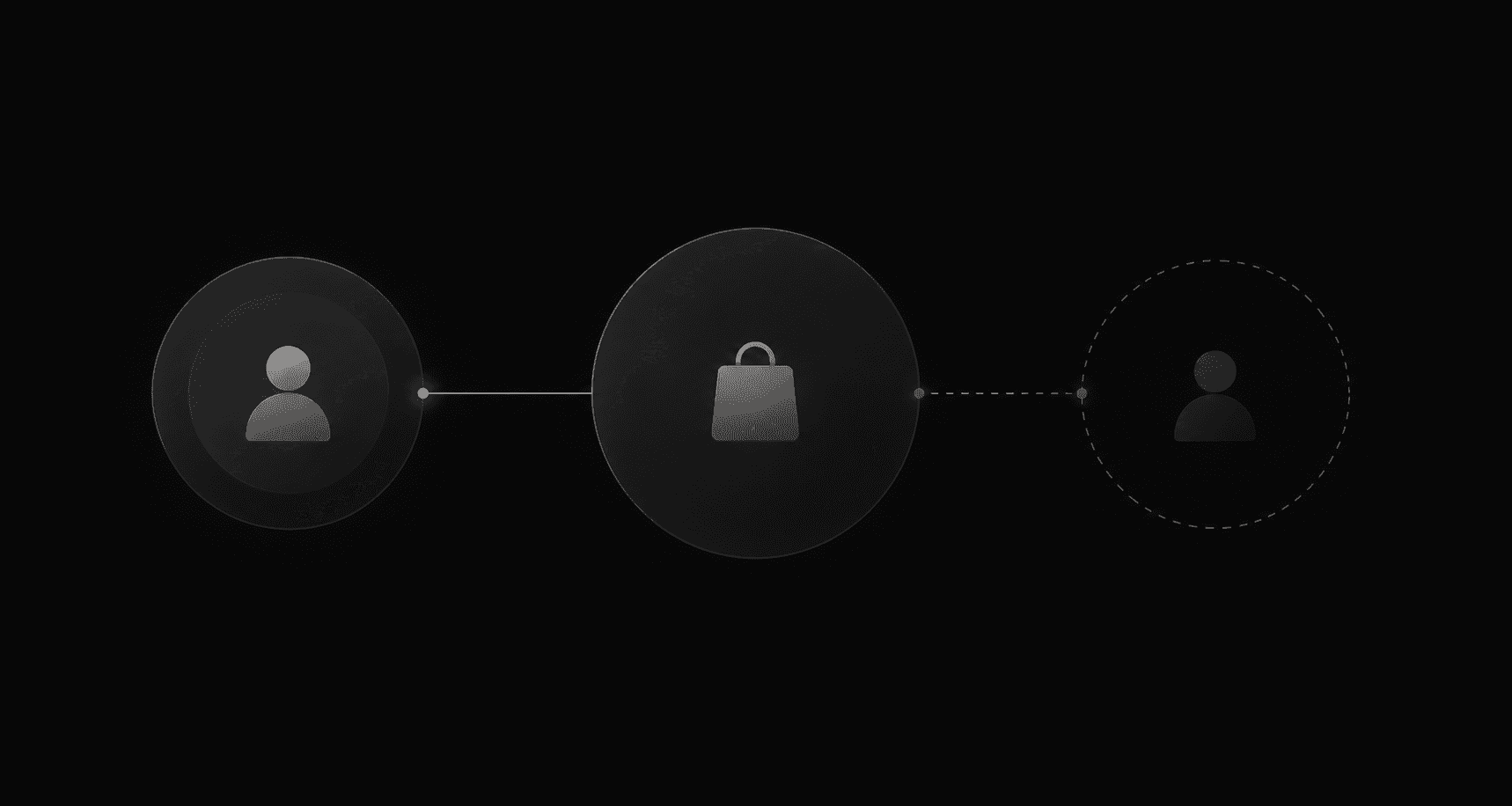
This was early in my career, back when I was still fairly new to conversion work and to product more generally, and I found myself working on a tutoring marketplace, the kind of two-sided thing where one set of people come to find and book a tutor and another set of people are the tutors, and the platform's whole job is really just to keep both of those groups turning up and reasonably content at the same time. On paper it's a single product with a single set of users, and in practice you're running two products that happen to share a database, because the people booking and the people teaching wanted fairly different things from the same screens, and were often not the same kind of person to begin with.
The most visible of those differences was age, though it wasn't the only one. The students, and in a lot of cases the parents doing the booking for them, tended to sit at one end of an age range while a good number of the tutors sat further along it, and that single fact rippled out into the rest of the experience, most obviously into which apps each side already lived in and therefore quietly expected us to resemble, and into how much patience they had for anything that got clever when they'd frankly rather it just sat where they expected it to be.
Easy for which of them
The place this showed up most, the thing you'd find yourself arguing about in nearly every review, was ease of use, except ease of use turns out not to be one target but two, and the two don't sit in the same spot. Making the booking effortless for a student, fast and obvious, with as few decisions as possible, the frictionless path any conversion person is trained to chase, tended to mean the complexity didn't vanish so much as move, and where it moved to was the tutor, who then had to absorb the ambiguity the student had been spared and carry whatever we'd smoothed out of the buyer's path. Which is to say the two eases were never really independent of each other, and a lot of the time you weren't creating ease at all, you were relocating it, from the side that showed up in your numbers to the side that didn't.
The number was only on one side
That business about the numbers is where the whole thing quietly tips, and it comes down to something about conversion work that, new as I was to all of it, took me an embarrassingly long time to properly see. Your headline metric is defined on an event, and in a marketplace the event everyone agrees to measure is the purchase, the booking, the moment intent turns into money, which sits squarely on the buyer's side of the platform. So the entire apparatus of optimisation, the funnels and the tests, the dashboard someone glances at on a Monday, all of it ends up instrumented around the buyer's journey, because that is simply where the number is. The tutor's experience has no equivalent single figure sitting on a screen going up or down and obliging someone to act. It degrades slowly and diffusely instead, a little more friction this month, a slightly worse week the next, none of it ever quite tripping an alarm, so the demand side gets years of careful, well-resourced attention and the supply side gets looked at properly about once it has already become a problem.
Keeping both of them in the room
In an ordinary product you can maybe run this way for a long time, favouring the buyer and trusting the user to cope, on the grounds that the buyer is the one holding the card. A marketplace won't extend you that credit, or it does for a while and then calls it in all at once, because your supply isn't a captive user base you can afford to slightly annoy, it is the actual thing you are selling. If the tutors quietly drift off because the platform keeps making their side a bit worse in order to make the student's side a bit smoother, you don't end up with a mildly unhappy cohort so much as with nothing left to sell the students you worked so hard to convert. The two of them were never buyer and afterthought, they were both holding the roof up, and the persona doc that quietly folds them into one word, "the user," is concealing precisely the tension you most needed to keep looking at.
I don't have a tidy method to hand you, and I've grown a bit wary of people who do, but the thing that helped was mostly a refusal to let the two of them collapse back into one. Two personas, kept deliberately apart, with the plain admission that their interests really do conflict in places and that "make it easy" is a question you have to answer twice, once for each of them, occasionally in opposite directions. It helped to drag at least one rough number over onto the supply side as well, so that the tutor's experience had something on a screen speaking up for it the way the buyer's funnel always did without being asked. Mostly it helped just to keep saying the words easy for which of them out loud in the room, because the moment that question stops being asked the answer quietly defaults to whichever side the metric already watches, and I still don't think we ever fully solved it, for what it's worth, since you don't really solve a conflict of interest, you just agree to keep it in the room rather than averaging it away, which is more awkward to sit with and, on a busy enough week, very easy to stop bothering to do.
Get new field notes delivered
One or two emails a month. Essays like this one, plus the occasional teardown of what we're seeing across customer calls.